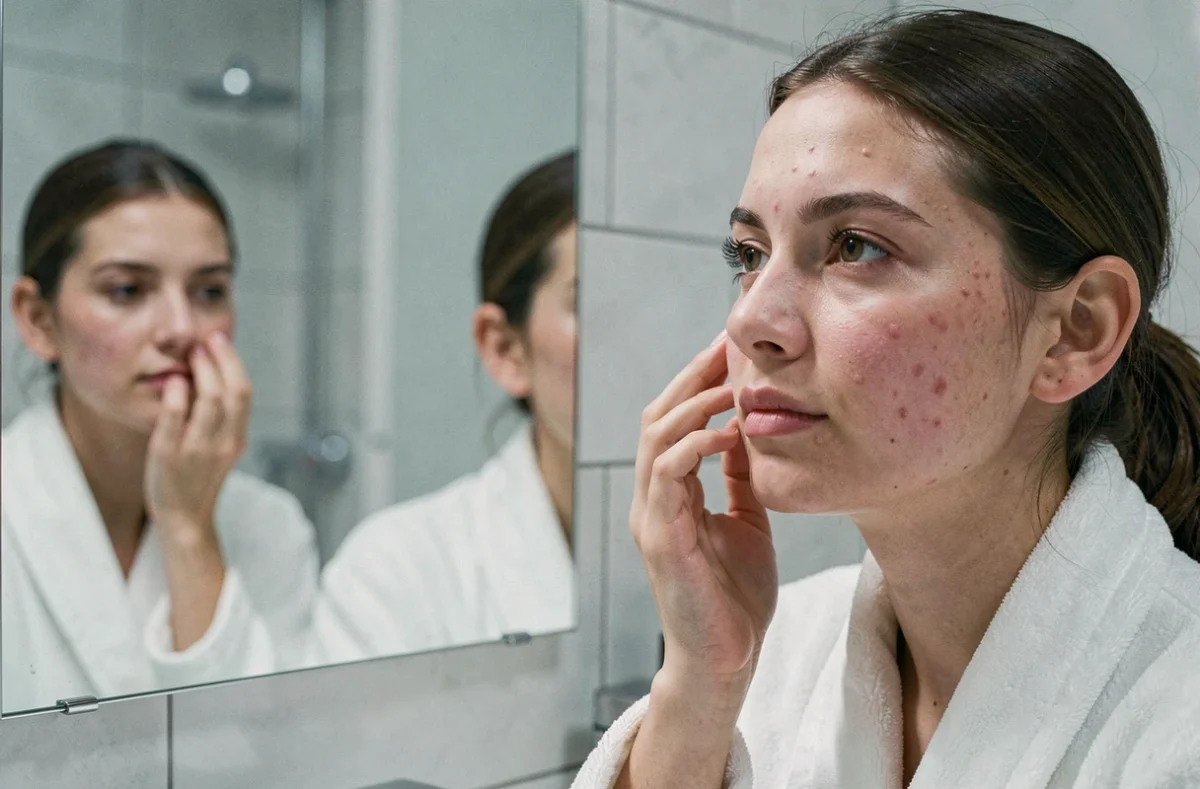
Acne is a chronic inflammatory disease of the pilosebaceous follicle. It affects teenagers, but also a significant proportion of adults, including those over 25. In Geneva, the wide range of dermatological and aesthetic services can make it difficult to decide which care pathway to follow.
How acne develops: understand the follicle before treating it
It all starts with excess sebum production triggered by androgens. This excess sebum builds up in the follicular duct, where dead skin cells are no longer shed properly. The resulting plug (comedone) creates an anaerobic environment that encourages the proliferation of the bacterium Cutibacterium acnes.
The local immune response then turns a simple blackhead into a papule, pustule or even a painful nodule. This cascade explains why effective treatment needs to target several factors at once: sebum production, duct keratinisation, bacterial load and inflammation.
To choose an acne treatment and care in Geneva, you first need to identify the severity of the condition. HUG guidelines emphasise a stepwise approach tailored to the grade of acne, rather than relying on a single product or technique.
Acne grades and treatment decision tree
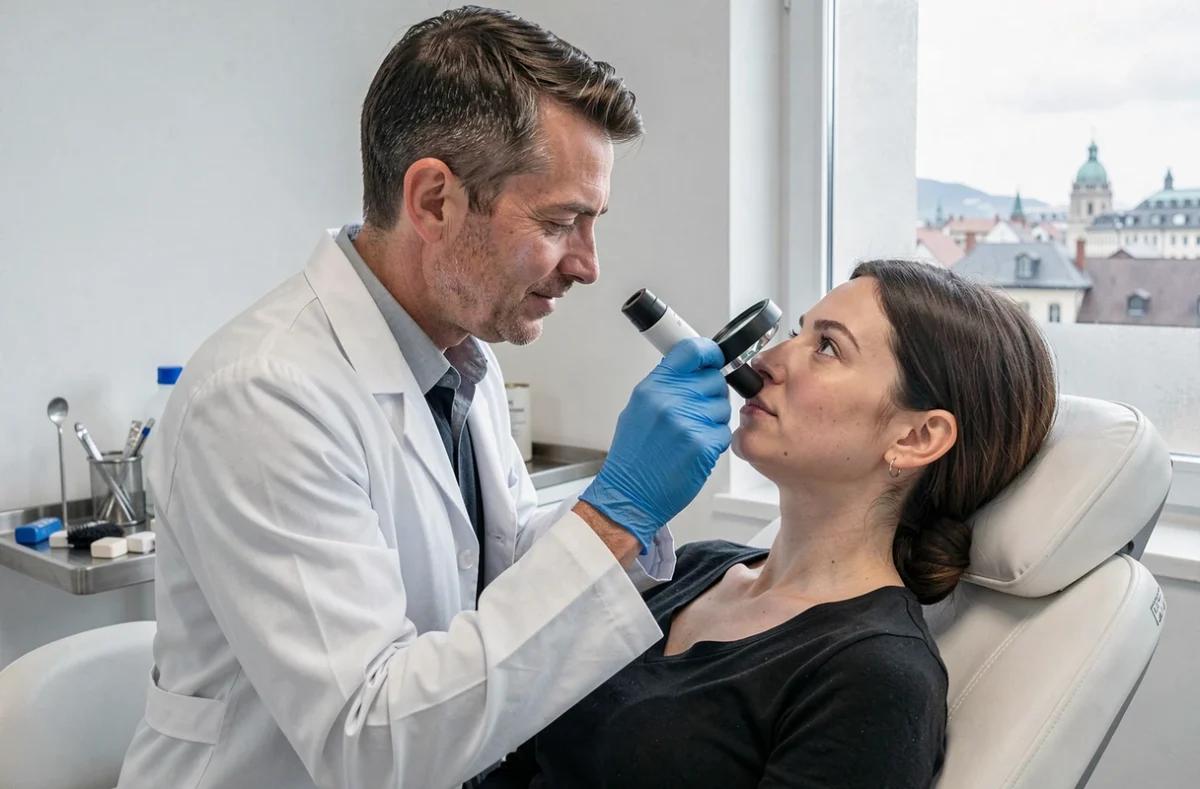
Grading guides the entire treatment strategy. A Geneva dermatologist assesses the type and number of lesions to determine the appropriate level of care.
Mild acne (grades 1–2): topical treatments as the first line of care
For open or closed comedones with a few papules, topical retinoids and benzoyl peroxide form the foundation of treatment. Retinoids (adapalene, tretinoin) normalise follicular keratinisation. Benzoyl peroxide reduces bacterial load without causing resistance, unlike some topical antibiotics when used alone.
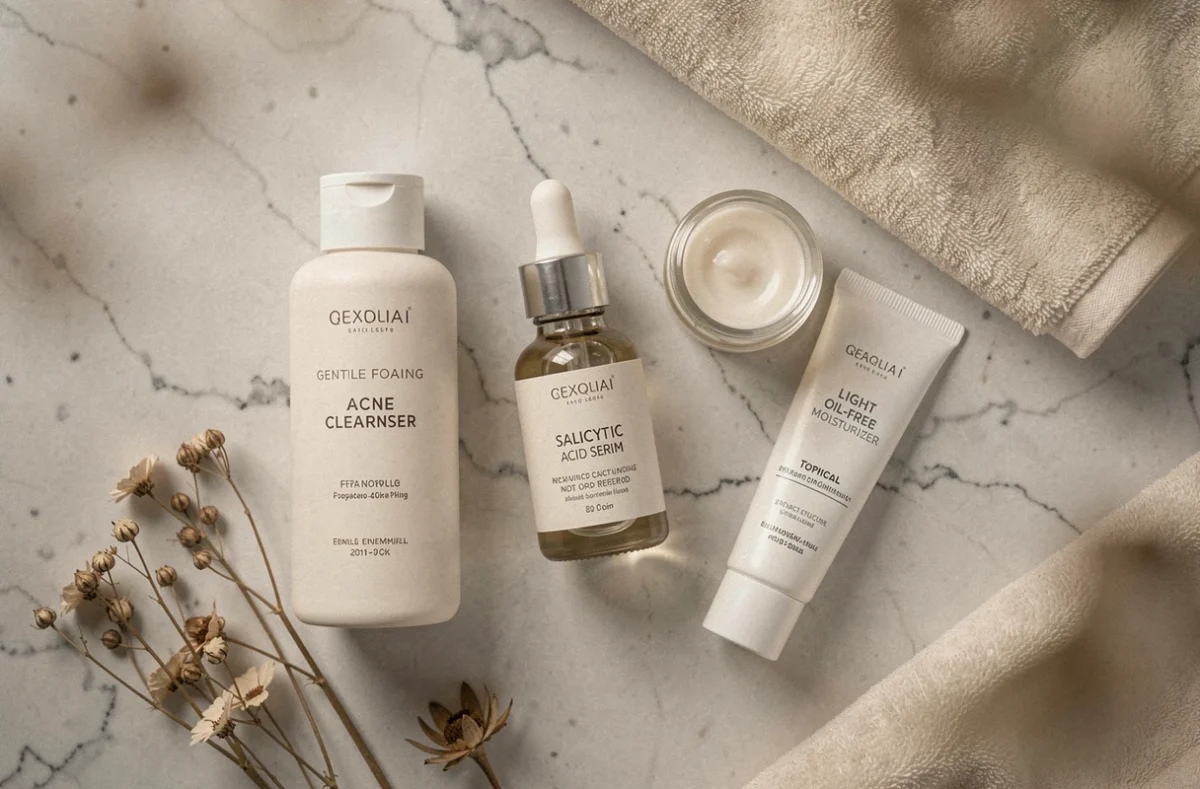
At this stage, your skincare routine directly affects how well medical treatment works. A gentle soap-free cleanser, a non-comedogenic moisturiser and suitable sun protection help prevent skin irritation, which often leads patients to stop treatment.
Moderate to severe acne (grades 3–4): oral treatments and close monitoring
When there are numerous inflammatory lesions or nodules appear, dermatologists generally combine oral treatment with topical care. The main options are:
- Oral antibiotics (tetracyclines), prescribed for a limited period to reduce inflammation and combined with a topical retinoid to limit the risk of bacterial resistance
- Oral isotretinoin, reserved for severe, nodular or treatment-resistant acne, with regular blood tests due to its potential side effects
- Hormonal treatments (certain contraceptive pills), considered for adult women when a hormonal component is identified
Isotretinoin remains the most effective treatment for achieving long-term remission in severe acne. In Switzerland, it requires strict monitoring, including monthly pregnancy tests for women of childbearing age.
Aesthetic clinic treatments in Geneva: what they can and cannot do
Geneva offers a wide range of aesthetic treatments for acne, including salicylic or glycolic acid peels, LED therapy, microneedling and professional skin cleansing. These treatments can complement medical care, but they are not a substitute for a dermatological assessment.
A superficial peel helps clear comedones and refine skin texture. Blue LED light targets the bacteria responsible for inflammation. These treatments can produce visible results for mild to moderate acne, especially when included in a regular treatment plan.
However, when acne is nodular, scarring is developing or lesions have not responded to topical treatments after several weeks, a beauty clinic cannot prescribe the necessary medication. HUG and Geneva dermatologists recommend consulting a specialist before trying multiple in-clinic treatments, to avoid delaying appropriate care.
Online acne consultations in Switzerland: a way to assess your options, not a shortcut
Some services offer an initial assessment based on photos, with a possible prescription or referral to a dermatologist. This can shorten the initial wait, which can sometimes be long for a dermatology appointment in Geneva.
Online consultations are best suited to mild acne or patients who have already received a diagnosis and need a repeat prescription. For severe, scarring or treatment-resistant acne, the provider will recommend in-person specialist care.
Common mistakes that make acne worse instead of treating it
Some common habits delay recovery or aggravate lesions. Three pitfalls come up regularly in consultations:
- Using harsh, drying products (alcohol, superfat soap), which trigger a reactive increase in sebum production and weaken the skin barrier
- Stopping prescribed treatment as soon as there is visible improvement, even though maintenance treatment helps prevent relapses over several months
- Using several acne-fighting ingredients at once (salicylic acid, retinoids, benzoyl peroxide) without medical advice, which can irritate the skin and mimic sensitivity that was not there before
A dermatologist adjusts the treatment plan according to tolerance and clinical response. Patience remains the most underestimated factor: most topical treatments take several weeks to produce lasting results.
People with acne in Geneva have broad access to dermatological and aesthetic care. The key is to follow a stepwise treatment approach, distinguish between comfort-focused skincare and medical care, and maintain regular follow-up until the skin is stable.