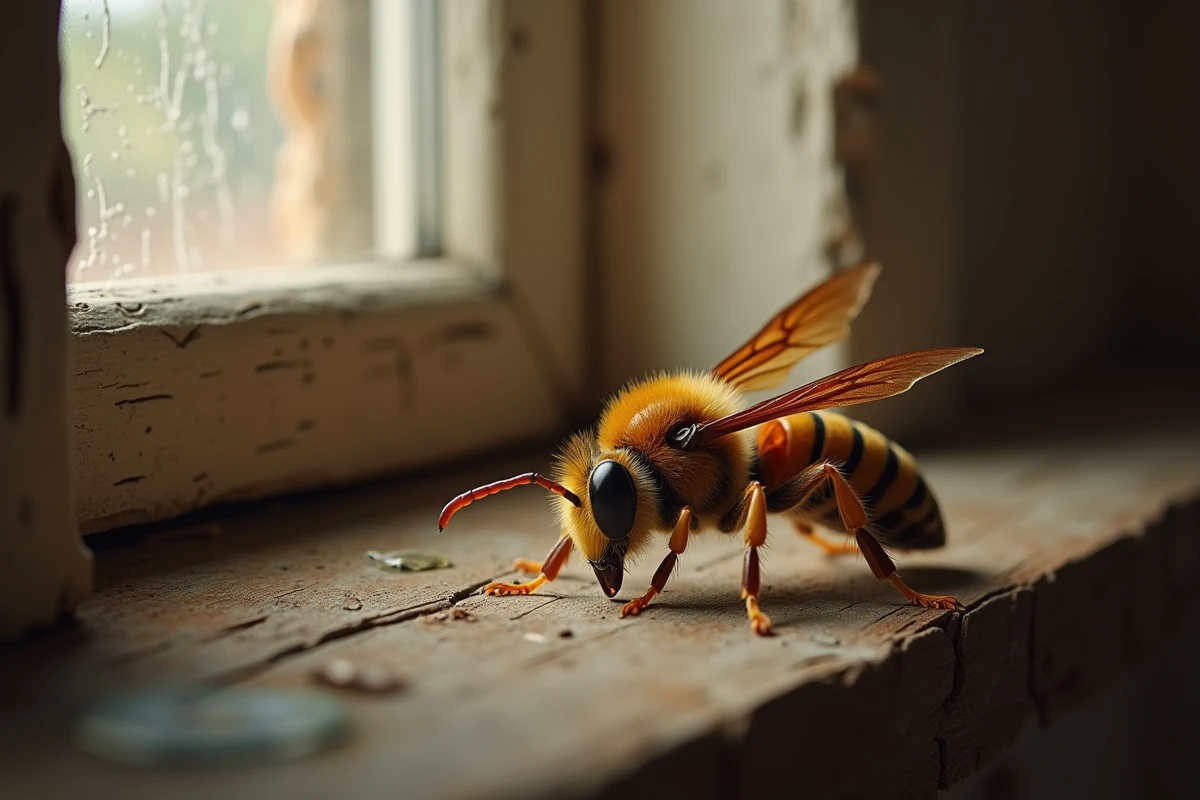
A wasp entering a room triggers two simultaneous reactions: the fear of being stung and, for many, a question about the meaning of this visit. The symbolism of the wasp in the home varies according to cultural traditions, the species involved, and the local health context. Measuring these differences allows us to separate what pertains to spiritual interpretation from what calls for a concrete response to a potentially dangerous insect.
European Wasp and Asian Wasp: Two Species, Two Interpretations
Before any symbolic interpretation, identifying the species changes the framework of understanding. The European wasp (Vespa crabro), present for centuries on the continent, is relatively non-aggressive. Worker wasps measure about 25 mm, while the queen can reach 35 mm. Its occasional presence in a house remains a mundane event during the warm season.
The Asian wasp (Vespa velutina), on the other hand, poses an ecological and health problem that is escalating in Europe. Its territorial expansion alters the relationship that residents have with this insect. An Asian wasp in the house primarily represents a public health issue, not a spiritual message.
| Criteria | European Wasp (Vespa crabro) | Asian Wasp (Vespa velutina) |
|---|---|---|
| Worker Size | About 25 mm | Slightly smaller, yellow legs |
| Aggressiveness | Low except near the nest | More reactive, attacks in groups |
| Traditional Symbolism | Warrior, protector, messenger | Invasive species, no ancient symbolism in Europe |
| Recommended Reaction | Observation, calm distancing | Report to local authorities |
This table highlights a point that articles on wasp spirituality often overlook: ancient symbolism exclusively concerns the European wasp. Attributing a spiritual message to an Asian wasp amounts to projecting a cultural framework onto a species that does not belong to it.
To delve deeper into the symbolism of the wasp in the home, one must first know which insect you are observing.
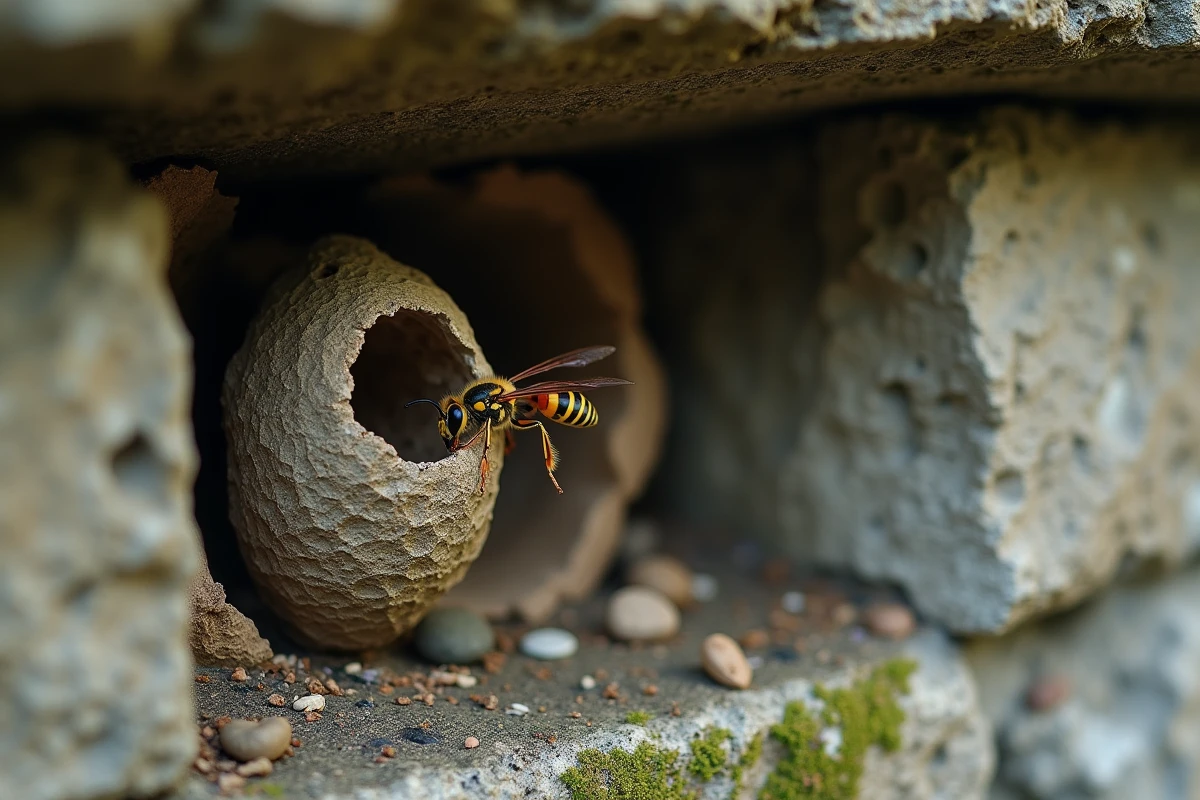
Spiritual Meaning of the Wasp: What Traditions Say
In Native American cultures, the wasp embodies a figure of a warrior protecting the family territory. This positive reading contrasts with the dominant European perception, where the insect is more associated with fear, aggression, and danger.
Native American Symbolism and Home Protection
The wasp entering a domestic space can be interpreted as a reminder to defend personal boundaries. This tradition assigns the insect a guardian role, not a threat.
The wasp as a protector of family territory is found in stories where its presence signals a need for vigilance in the face of a conflicting situation. The insect does not carry the conflict; it warns of it.
European Reading: Fear and Confrontation with Emotions
In Europe, the symbolism of the wasp revolves around confrontation. Its presence in the home is often read as an invitation to face a avoided situation, a repressed emotion, or an unresolved conflict.
Several interpretation frameworks coexist:
- The wasp as a mirror of unexpressed inner anger, its sting symbolizing the pain caused by prolonged silence
- A call to examine one’s relationship with personal territory, especially during periods of moving or family tensions
- A signal of transformation, the insect itself undergoing seasonal cycles marked by the construction, defense, and disappearance of the nest
The presence of the wasp questions the relationship between protection and aggressiveness. In this reading, the insect does not deliver a univocal message. It reflects what the person is experiencing at the moment of the encounter.
Wasp in Dreams: Recurring Meanings
The wasp regularly appears in dreams, and interpretations follow a logic similar to waking symbolism. Dreaming of a wasp nest in one’s home points to an accumulation of domestic tensions. Dreaming of a sting refers to a specific emotional wound.
The difference with other dream insects lies in the intensity. The bee in a dream evokes collective work. The wasp, a passing irritation. The wasp in a dream signals a situation that can no longer be ignored.
A calm wasp in a dream, resting on a piece of furniture without aggression, is generally interpreted as a sign of regained control. A swarm, on the other hand, translates to a feeling of being overwhelmed by multiple pressures.

Differentiating Spiritual Message and Real Health Risk
The boundary between symbolic interpretation and concrete danger deserves to be clearly established. An isolated wasp entering through an open window in summer does not constitute a risky situation. A wasp that returns every day, or several wasps observed in the same place, suggests the proximity of a nest.
- An isolated and calm wasp: observe from a distance, distance without sudden movements, possible personal reflection
- Several wasps in a few days: inspect the building (attics, window frames, gutters) to locate a nest
- Confirmed presence of Asian wasps: mandatory reporting to the town hall or the departmental federation for pest control
Attributing a spiritual meaning to an intrusion of Asian wasps sometimes delays necessary interventions. The discernment between invasive species and occasional visits conditions the appropriate response.
People allergic to hymenopteran venoms must treat any presence of wasps as a medical risk, regardless of any symbolic reading.
The richness of the symbolism attached to the wasp lies precisely in this tension between protection and danger, between inner message and outer reality. Identifying the species, assessing the frequency of visits, and knowing one’s own health status regarding stings remains the foundation before any interpretation.