
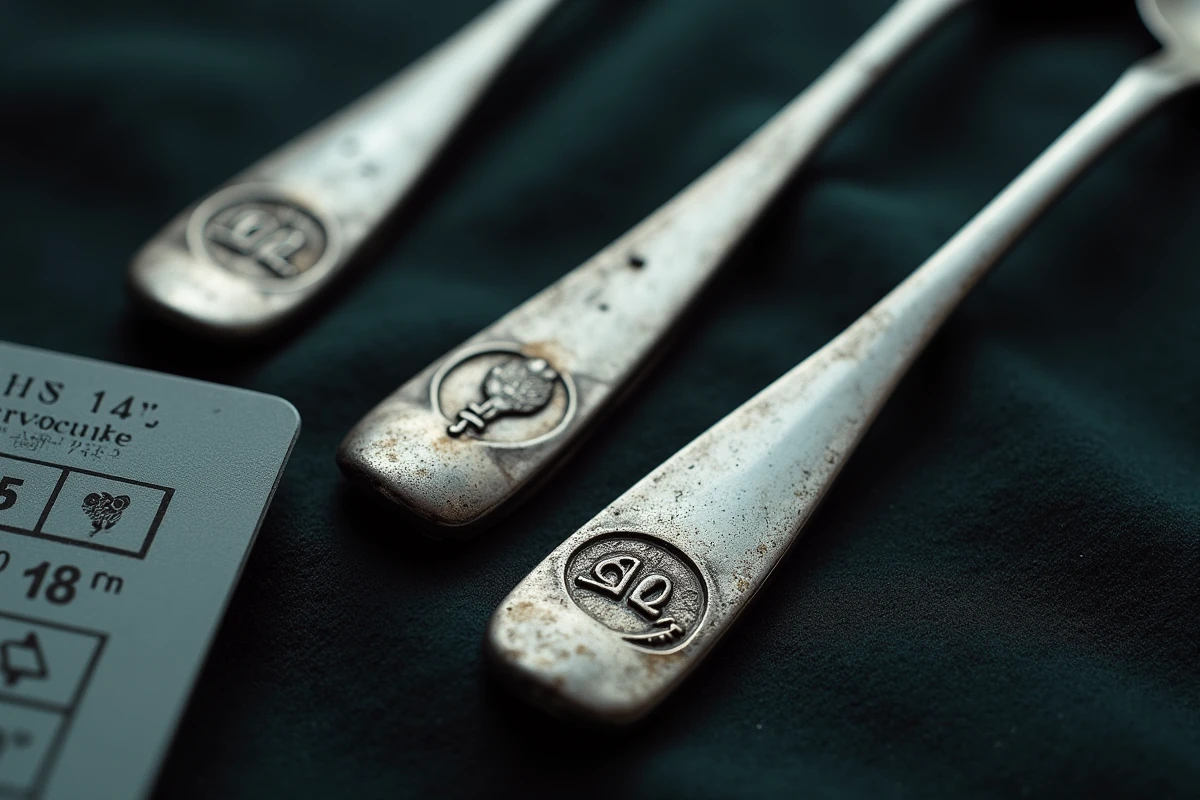
You hold an antique fork between your fingers, turned handle side up. A tiny mark is stamped into the metal, barely visible to the naked eye. This small symbol, the hallmark, determines whether you have a solid silver piece or a simple silver-plated item in your hands. Knowing how to read it changes everything, whether you are considering a purchase at a flea market or reselling a family silverware set.
Portable XRF Scanners and Hallmark Verification by Individuals
The second-hand silver market is facing a growing problem of counterfeit hallmarks, fueled by imports from Southeast Asia. Reports to French customs have increased since 2024, particularly on platforms like eBay and Leboncoin.
Decree No. 2025-347 of April 12, 2025, has strengthened the obligations: any transaction of second-hand silverware above 500 euros requires XRF certification. This X-ray fluorescence analysis measures the exact composition of the metal without damaging it.
Since 2026, XRF scanners coupled with mobile applications have entered the consumer market. These portable devices allow an individual to point a sensor at a piece of silverware and obtain the silver content in parts per thousand within seconds. Before checking the hallmark of silverware, it is still useful to understand what these marks mean, as the scanner confirms a result that the eye has initially spotted.

Where to Locate the Hallmark on Silverware
The hallmark is not located in the same place on a spoon, fork, or knife. Searching in the right spot prevents you from concluding too quickly that a piece of silverware is not hallmarked.
- On a spoon: turn it over. The hallmark is stamped on the back of the handle, near the bowl or halfway down.
- On a fork: same logic, back of the handle, often close to the base of the tines.
- On a knife: the blade is rarely made of solid silver (too soft for cutting). The hallmark is found on the ferrule, this small metal ring between the handle and the blade.
Readability poses a real problem. Flea market hunters find that the Minerva hallmarks on silverware from the 1970s-1980s are often worn away by repeated abrasive cleanings. A magnifying glass (at least x10) then becomes a basic tool before any transaction.
Minerva Hallmark, Maker’s Mark, and Parts Per Thousand: Reading French Marks
Have you spotted a small oval mark with a profile of a helmeted woman? That’s the Minerva, the French guarantee hallmark applied by customs. This symbol certifies that the metal has been tested.
The Parts Per Thousand, a Decisive Value Criterion
A piece marked “1st title” contains at least 925 parts per thousand of pure silver, the rest being copper to ensure strength. The “2nd title,” at 800 parts per thousand, contains less silver and is worth proportionally less upon resale.
Next to the Minerva, a tiny number (1 or 2) indicates this title. If you only see a single hallmark without a visible number, a magnifying glass and good raking light make the difference.
The Maker’s Mark, the Manufacturer’s Signature
A diamond containing initials identifies the silversmith or the company that manufactured the piece. This hallmark does not indicate the purity of the metal, but it provides information about the origin and time of manufacture. Some maker’s marks significantly enhance the resale value beyond the price of the metal, depending on the reputation of the silversmith.
Foreign Hallmarks and Common Traps in the French Market
Have you found silverware without a Minerva but with a walking lion? It’s probably the “lion passant,” a British hallmark guaranteeing a title of 925 parts per thousand. According to a Sotheby’s study published in early 2026, British silver hallmarks are gaining popularity in the French market, particularly for their good patina retention.
German silverware often bears the number “800” stamped directly into the metal, without a figurative symbol. The title is lower than the French first title standard, which is reflected in the price per kilo upon resale.
Deceptive Markings to Spot
A marking of “84 g” or “tin” has nothing to do with a silver guarantee hallmark. Mentions like “silver-plated,” “EPNS” (for British pieces), or a simple number without a standardized frame indicate a plated piece, not a solid silver piece.
- “EPNS” or “EP”: silver-plated metal by electrolysis, no value as a precious metal.
- “84” alone, without a frame or symbol: often a model number, not a title.
- Square hallmark with a scale or a round number (10, 20, 40): indicates the thickness of the plating in microns, not the silver content.
The magnetic test serves as a quick initial filter: solid silver is not attracted to a magnet. If the piece reacts, it is a ferrous alloy plated. This test alone is not sufficient (copper and brass are also not magnetic), but it eliminates the most blatant counterfeits.
Solid Silver or Silver-Plated: What the Hallmark Changes on Resale Price
The price of silver fluctuates. A first title solid silver piece is resold by weight, depending on the price per kilo, to which may be added a premium related to the silversmith, style, or antiquity.
A silver-plated piece, even signed by a recognized manufacturer, is only worth its decorative or collectible interest. The layer of silver deposited by electrolysis represents a tiny fraction of the total weight.
Before visiting a professional buyer, check three elements: the presence of a guarantee hallmark (Minerva in France, lion passant in the UK), the associated parts per thousand title, and the readability of these marks. A well-preserved hallmark facilitates the transaction and avoids a depreciation related to uncertainty about the actual composition of the metal.