
Persistent humidity, even in minimal amounts, compromises the structure of leather fibers. Some deodorants applied to the skin enhance the fixation of odors on this material, which is known for its durability. Unlike synthetic textiles, leather does not tolerate repeated washing or abrasive products.
A poor maintenance method weakens the jacket and encourages the appearance of lasting stains. Some common products, touted for their effectiveness on other fabrics, cause discoloration or stiffen the surface here. Solutions exist to eliminate the odor without altering the appearance or flexibility of the leather.
Why do leather jackets retain sweat odors?
Leather has always been appealing, but its porous structure makes it vulnerable to the fixation of stubborn odors. Owning a leather jacket, whether made from lamb, cowhide, suede, or nubuck, combines elegance and robustness. However, even the slightest exposure to sweat leaves a lasting mark. The tiny pores of leather trap organic compounds from sweat and capture foul-smelling molecules.
The lining significantly influences this phenomenon. Whether removable or sewn in, it absorbs moisture and body odors, which it then releases over time. As a result, sweat settles in, the leather jacket becomes infused, and the odor refuses to disappear. Models with synthetic or cotton linings have specific characteristics: each material absorbs differently, but all allow odors to pass through to the leather.
The very nature of leather sometimes exacerbates the situation. A smooth leather jacket is easier to clean, while a nubuck or suede jacket is significantly more fragile. Thick jackets, often made from cowhide, retain odors longer in their fibers. When humidity persists, bacteria proliferate, and the scents cling for good.
To delve deeper into the issue of leather jacket odors and discover targeted solutions, visit the Rêves de Déco website for the page “Say goodbye to the sweat odor on your leather jacket.” You will find advice tailored to each type of leather, lining, or level of impregnation.
Methods that really work to eliminate bad odors without damaging leather
For the maintenance of a leather jacket, approximation has no place. Here, proven methods make the difference. Take baking soda: sprinkle it inside the jacket, wait several hours, and then gently remove the powder with a soft cloth or a soft brush. This action absorbs sweat odors while preserving the flexibility of the leather.
For the lining, opt for a mixture of warm water and Marseille soap. Apply it locally with a clean cloth, without soaking, and then let it air dry, away from direct heat. A bit of talc or cornstarch enhances the absorbing action.
White vinegar also has its place: dampen a cloth, dab the lining, and then air it out thoroughly. For really stubborn odors, place activated charcoal or coffee grounds (in small sachets) in the sleeves, close the jacket, and let it work overnight.
Before using these tips, consider a few simple precautions:
- Always test your products on a discreet area of the leather.
- Remember to nourish the material after each operation with a special leather cleaning lotion.
Cleaning a leather jacket or leather coat requires patience and method. Avoid aggressive products and excess water, or risk dulling or hardening the material. Well-maintained, your jacket will retain its style, flexibility, and longevity.
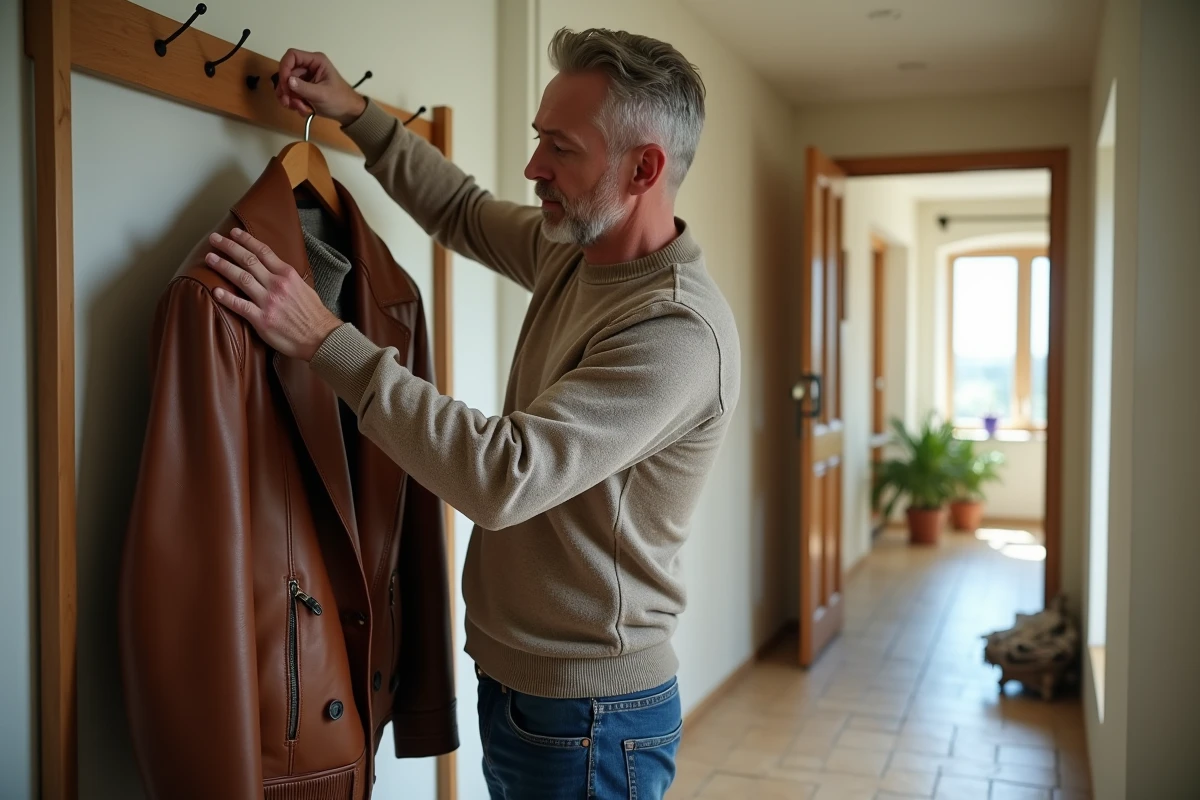
Precautions and tips to keep your leather jacket fresh longer
Keeping a leather jacket in perfect condition requires continuous vigilance. Store it in a fabric cover, away from direct light, humidity, and temperature fluctuations. Forget plastic bags: they create condensation and intensify bad odors. Prefer a wide hanger to maintain the shape of the jacket and avoid any deformation.
Always air out your leather jacket after each use, especially if the lining has been exposed to sweat. Let it dry at room temperature, away from any heat source: radiators, hair dryers, or fireplaces should be avoided. Leather, being sensitive by nature, cannot withstand thermal shock or prolonged exposure to sunlight, which dries it out and dulls its appearance.
Regular maintenance is essential, but without excess: dust with a soft cloth or a soft brush, then hydrate with an appropriate cream or cleaning lotion, applied every three to six months. Waterproof the surface from time to time, especially after cleaning or if the jacket has been rained on.
Completely avoid abrasive products, acetone, nail polish remover, or strong detergents. Washing with large amounts of water or in a machine remains the sworn enemy of leather and its lining. In the face of a stubborn stain, it is better to call on a skilled professional, who guarantees a respectful and lasting intervention.
A well-maintained leather lasts through time without losing its splendor. With each season, as you rediscover it, you appreciate the value of a precise gesture and discreet vigilance. This is how a leather jacket retains its flair, year after year.