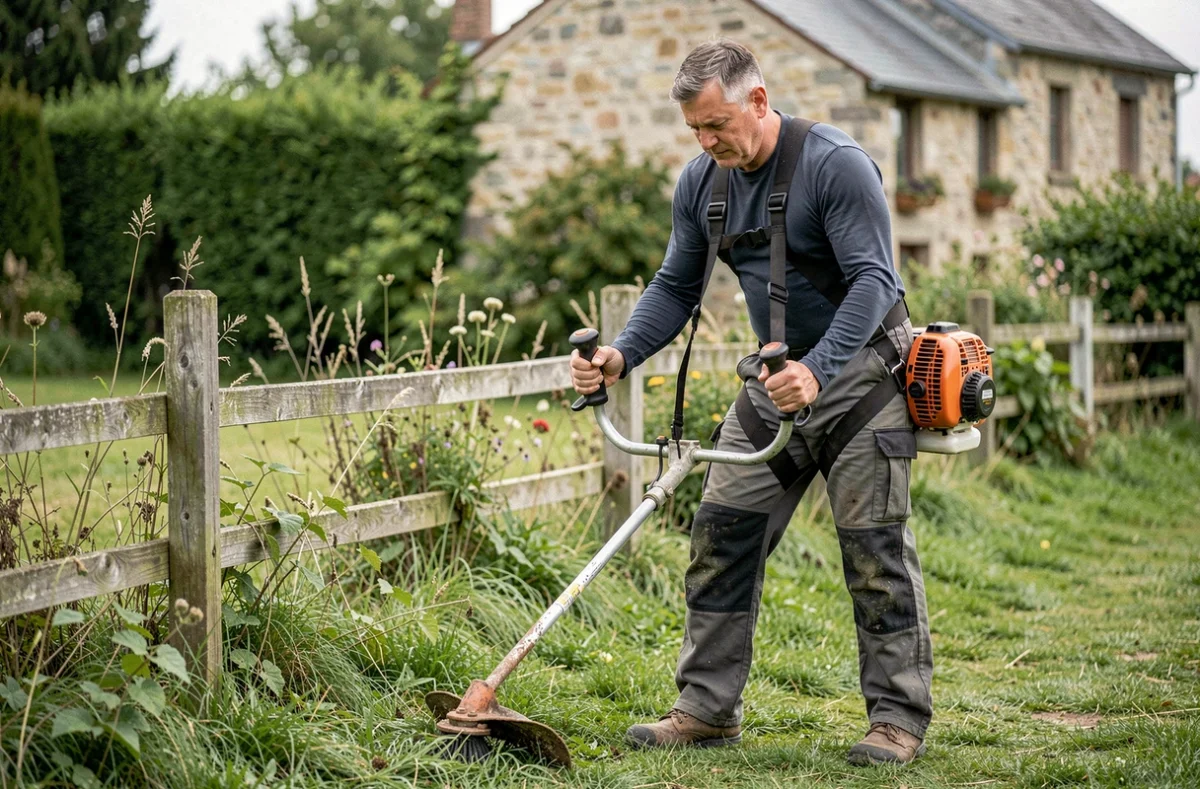
Between a small displacement thermal brush cutter and a model designed for intensive clearing, the price can vary from simple to triple and the weight can nearly double. The choice of a thermal brush cutter depends on measurable criteria (displacement, weight, type of transmission) whose differences determine both the comfort of use and the longevity of the machine. This article compares the technical parameters that separate the different categories and identifies often underestimated points of vigilance.
Displacement and transmission: the technical differences between categories of thermal brush cutters
The engine displacement remains the primary indicator of cutting capacity. Models intended for lawn finishing and borders are in the lower range, around 21 to 30 cm³. Mid-range machines, suitable for average terrains with brambles and tall grasses, typically range between 30 and 40 cm³. Beyond that, we enter the segment of brush cutters designed for heavy clearing or semi-professional use.
| Category | Indicative Displacement | Typical Use | Transmission |
|---|---|---|---|
| Entry-level | 21-30 cm³ | Finishing, borders, fine grasses | Flexible |
| Mid-range | 30-40 cm³ | Brambles, tall grasses, hilly terrain | Flexible or rigid |
| Intensive use | More than 40 cm³ | Clearing, thick underbrush, woodland | Rigid with conical torque |
The rigid transmission with conical torque transmits more power to the cutting head than a flexible shaft. On rough terrain, this difference translates to less unwanted vibrations and a consistent cut even in dense vegetation. Comparative guides available on top-debroussailleuse-thermique.com allow for comparison of these technical characteristics by model.
Old fuel and clogging: the trap that immobilizes the machine
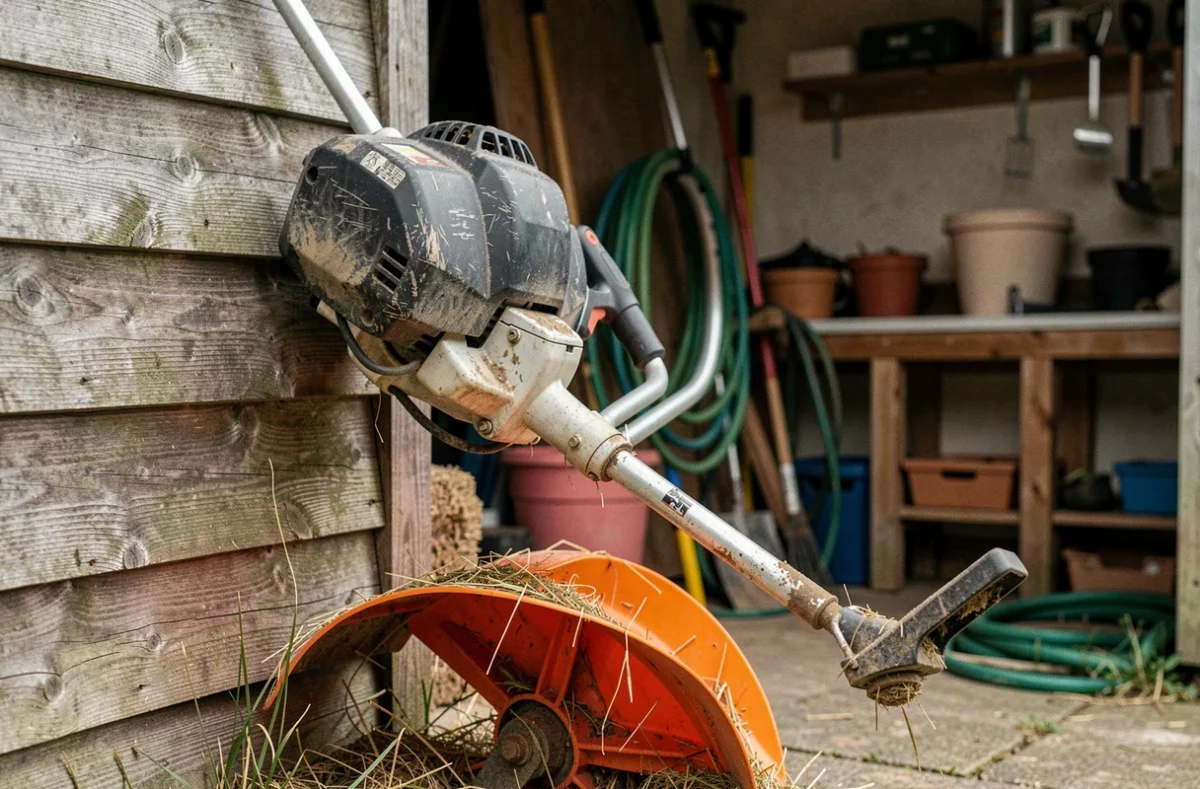
The majority of buying guides detail power and ergonomics but quickly overlook the most common cause of breakdown: an old gasoline-oil mixture clogs the fuel system. Fuel stored for several months in the tank or in a poorly closed can degrades its properties. The result manifests as starting difficulties, repeated stalling, or a loss of power during use.
Three components concentrate most of the corrective maintenance interventions:
- The air filter, which clogs faster with degraded fuel and reduces the air intake necessary for combustion
- The spark plug, whose fouling prevents the spark and causes starting hiccups
- The fuel system itself (hoses, fuel filter), where residues accumulate and block the supply
Emptying the tank after the last use of the season remains the most effective precaution. This simple reflex avoids the majority of spring restart failures. Choosing a model whose wear parts (filters, spark plugs) are easily available in your area also shortens downtime.
Usage restrictions during dry periods: a geographical choice criterion for thermal models
In areas exposed to fire risk, prefectural orders may limit or temporarily prohibit the use of a thermal brush cutter during hot, dry, or windy periods. Regulations vary by department and level of danger, meaning that two property owners just a few kilometers apart may be subject to different rules.
This constraint directly impacts the choice of engine type. In departments regularly affected by summer restrictions, a thermal-only model may become unusable precisely when vegetation is growing the most. Some users opt for a battery-powered supplement to cover these periods, which alters the overall budget.
Legal obligation for clearing around homes
Property owners and occupants of land located near woods or forests exposed to fire risk are subject to a legal obligation for clearing. This obligation requires regular maintenance around buildings, but the exact modalities (perimeter, frequency) depend on the territory concerned.
This regulatory framework has a concrete consequence on the sizing of the machine. An owner subject to this obligation works on imposed areas and volumes of vegetation, not just on what they decide to maintain. The displacement must correspond to the volume of regulatory work, not just to the size of the ornamental garden.
Usage hours and noise: what regulations impose on thermal models
The allowed time slots for noisy gardening tools are not uniform across France. Each municipality can set its own hours by municipal decree. Generally, use is permitted during the day on weekdays, with more restricted hours on Saturdays and even more so on Sundays and public holidays.
A thermal brush cutter produces a noise level significantly higher than that of an electric or battery model. For a user whose land borders several homes, the available working time is mechanically reduced. Checking the municipal decree before purchase allows for an assessment of whether the allowed time window is sufficient to maintain the area in question with a thermal engine.
Line, blade, or disc: adapting the cutting system to the vegetation
The cutting system determines what the machine can actually cut. Nylon line is suitable for soft grasses and finishing. Two or three-tooth blades tackle brambles and woody underbrush. Spike or saw-tooth discs are aimed at small shrubs and softwood.
Choosing a model compatible with multiple cutting systems offers the necessary versatility to alternate between lawn finishing and clearing without changing machines. Most mid-range and higher thermal brush cutters accept this interchangeability, but it remains useful to check the diameter of the shaft and the accessories supplied as standard.
The sizing of a thermal brush cutter ultimately relies on a combination of the area to be maintained, the type of vegetation, local regulatory constraints, and frequency of use. Underestimating the obligations for clearing or seasonal restrictions leads to a poorly calibrated purchase, whether the machine is too weak for the volume of work or unusable during the months when it would be most needed.