
A harmonious family life relies less on organizational rules than on the ability of adults to maintain their own psychological balance. The Weekly Epidemiological Bulletin from Santé publique France (February 28, 2023) highlights a marked increase in anxious and depressive symptoms among mothers of young children after 2020, with a direct impact on family conflicts and the home environment.
This observation shifts the focus: before seeking storage or planning tips, the priority is to understand what truly deteriorates family daily life, and then to act on these specific levers.
Parental mental health: the invisible foundation of family life
Most content about family life treats parents as organizers. Planning meals, dividing tasks, setting up a shared calendar. These tips assume that parents have the necessary energy to implement them.
When a parent goes through a period of anxiety or exhaustion, even a well-designed family schedule collapses. Parental mental health conditions the family climate far more than any organizational tool.
Three concrete actions can help protect this balance:
- Identify a non-negotiable weekly time slot for each parent, dedicated to a personal activity (sports, reading, going out alone). This time is not a luxury; it’s maintenance.
- Verbalize the mental load within the couple during regular check-ins, naming the invisible tasks (making medical appointments, school follow-up, managing seasonal clothing).
- Consult a healthcare professional as soon as fatigue becomes chronic or irritability settles in. A general practitioner can guide towards appropriate follow-up.
Parents who take care of their mental health pass on a model of emotional regulation to their children, which reduces daily tensions. To delve deeper into these topics, you can find all family resources on Parents Infos that address these often-overlooked dimensions.
Screens and family life: negotiating without daily conflicts
The EU Kids Online 2023 study, coordinated by the London School of Economics with a French component led by the University of Paris Nanterre, identifies disagreements over screen time as one of the primary reasons for disputes reported by children aged 9 to 16. It is neither household chores, homework, nor bedtime that generates the most friction, but the ongoing negotiation around smartphones, tablets, and video games.

Defining a clear and stable framework reduces conflicts related to screens. The most effective technique is to co-create a family digital charter with the children, rather than imposing unilateral rules.
This charter sets specific time slots (no screens during meals, turning off at a defined time on weekday evenings) while allowing the child some choice over the content consumed. When the child participates in creating the rule, they contest it less.
A point often overlooked: parents’ digital behavior weighs as much as the imposed rules. Checking your phone at the table while forbidding screens for children creates an inconsistency that even a six-year-old can perceive. Parental consistency regarding screens is more effective than restriction.
Family rituals: creating markers without rigidity
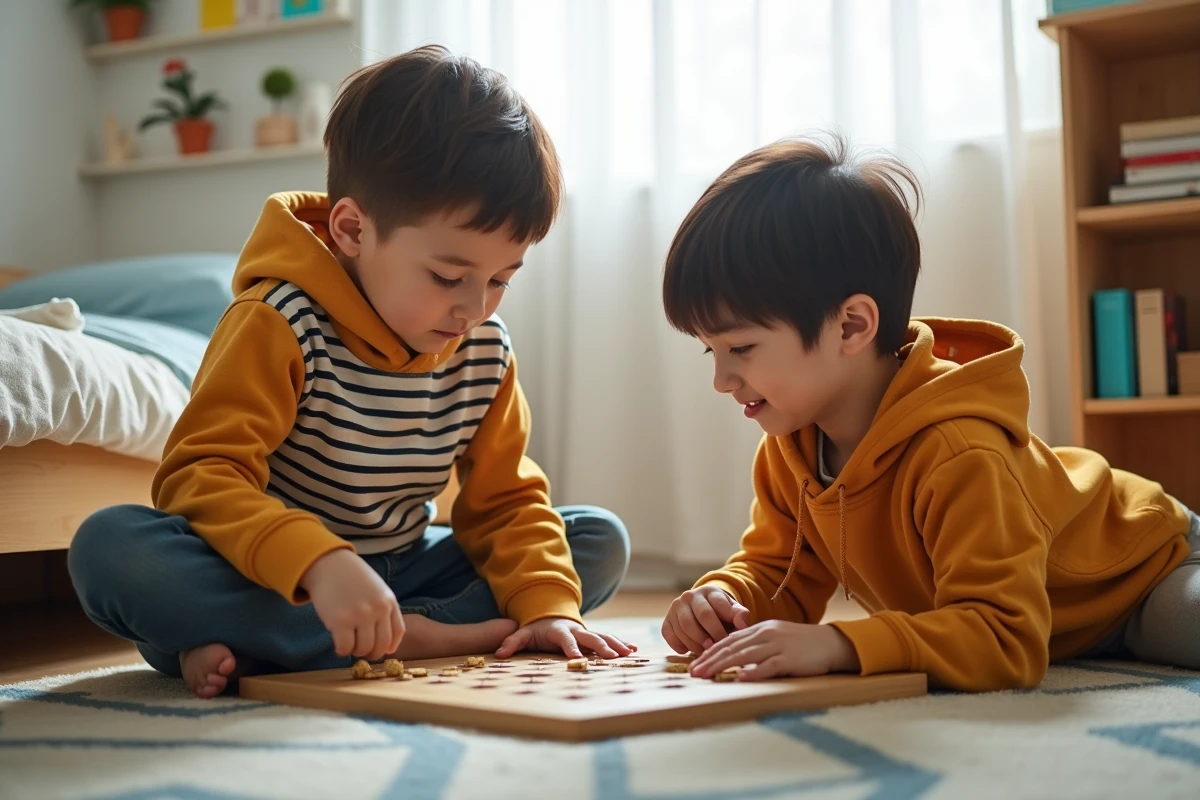
A family ritual is not a routine. The routine is functional (shower, meals, bedtime). The ritual creates a moment of emotional connection among family members. A Sunday meal, a walk on Saturday morning, a board game night on Friday: what matters is not the activity, but its regularity and the fact that everyone participates without constraint.
Families that maintain two to three weekly rituals report better communication between parents and children. The reason is simple: these moments create informal dialogue spaces where children spontaneously talk about their daily lives, school, and friends.
A good family ritual lasts less than thirty minutes. Overly ambitious formats (day trips, costly activities) do not survive the constraints of daily life. A leisurely weekend breakfast, without phones on the table, works better than a trip to an amusement park once a month.
For families with children of different ages, alternating activities according to everyone’s preferences prevents older siblings from losing interest. A teenager will not participate for long in a game designed for a five-year-old, and vice versa.
Communication within the couple: the pillar that children observe
Children absorb their parents’ communication style. Disagreements between adults are not a problem in themselves: what deteriorates the family climate is how these disagreements are expressed. Yelling, slamming doors, prolonged silence, passive-aggressive remarks in front of the children.
Expressing a disagreement calmly in front of your children teaches them conflict resolution. A couple that verbalizes its differences (“I don’t agree with you on this point, let’s talk about it tonight”) offers a model that the child will replicate in their own relationships.
Two concrete mechanisms help maintain this quality of communication:
- Reserve sensitive topics (budget, major educational decisions, work issues) for times when the children are not present or are in bed.
- Use paraphrasing before responding during a disagreement: “If I understand correctly, you think that…” helps to diffuse rising tension.
- Accept not to resolve a disagreement immediately. Letting a night pass before resuming a tense discussion produces better results than trying to settle it hot.
Family life cannot be optimized like a professional project. The Weekly Epidemiological Bulletin of 2023 and the EU Kids Online study remind us that the most powerful levers are parental mental health, screen management, and the quality of the couple’s relationship. Three concrete axes are better than twenty generic tips.