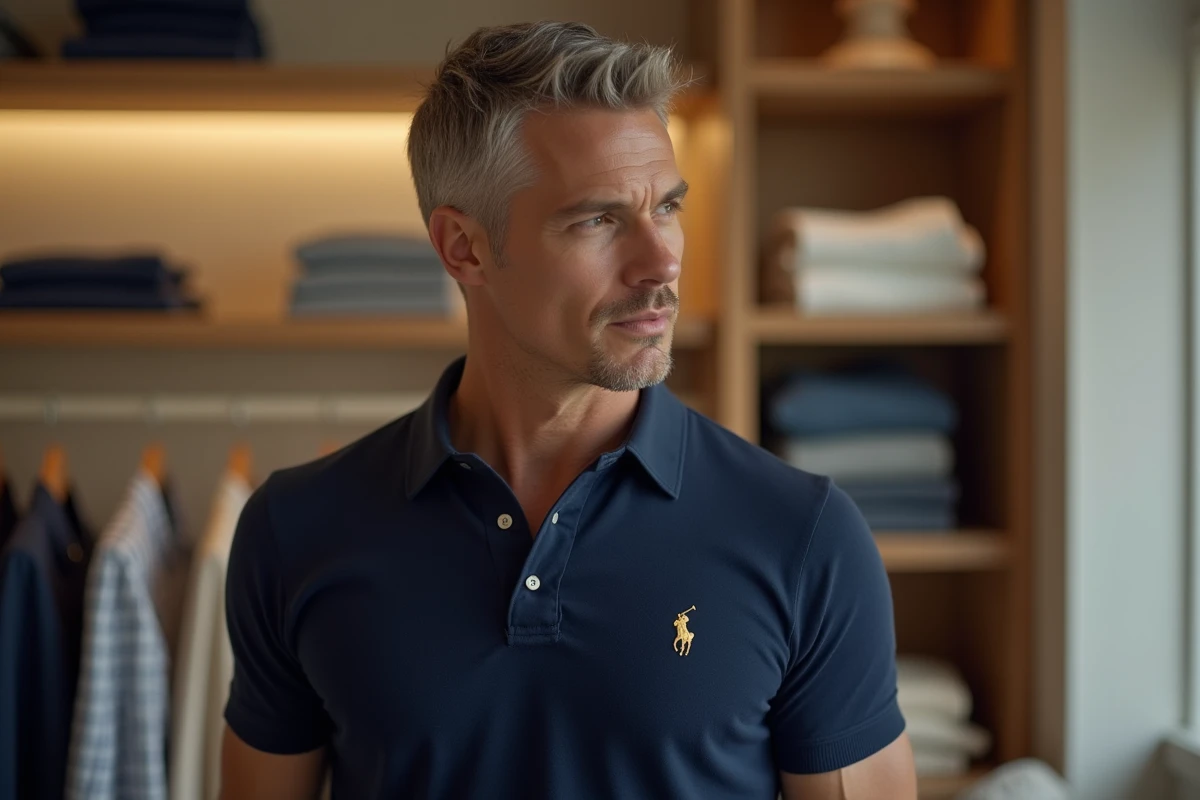
You come across an embroidered polo featuring a rider in an online shop, you click, and the label reads “Polo Club” instead of “Ralph Lauren”. Doubt sets in. Polo Club and Ralph Lauren share a similar visual universe, equestrian imagery, and preppy cuts. The resemblance ends there: origins, price range, material quality, and positioning diverge on almost all points.
Reading the label: concrete clues that separate the two brands
On a rack or in an online cart, the first instinct is to turn the garment over. At Ralph Lauren, the label specifies the exact line: Polo Ralph Lauren, Lauren Ralph Lauren, or Purple Label. Each sub-brand corresponds to a distinct price segment and level of finishing.
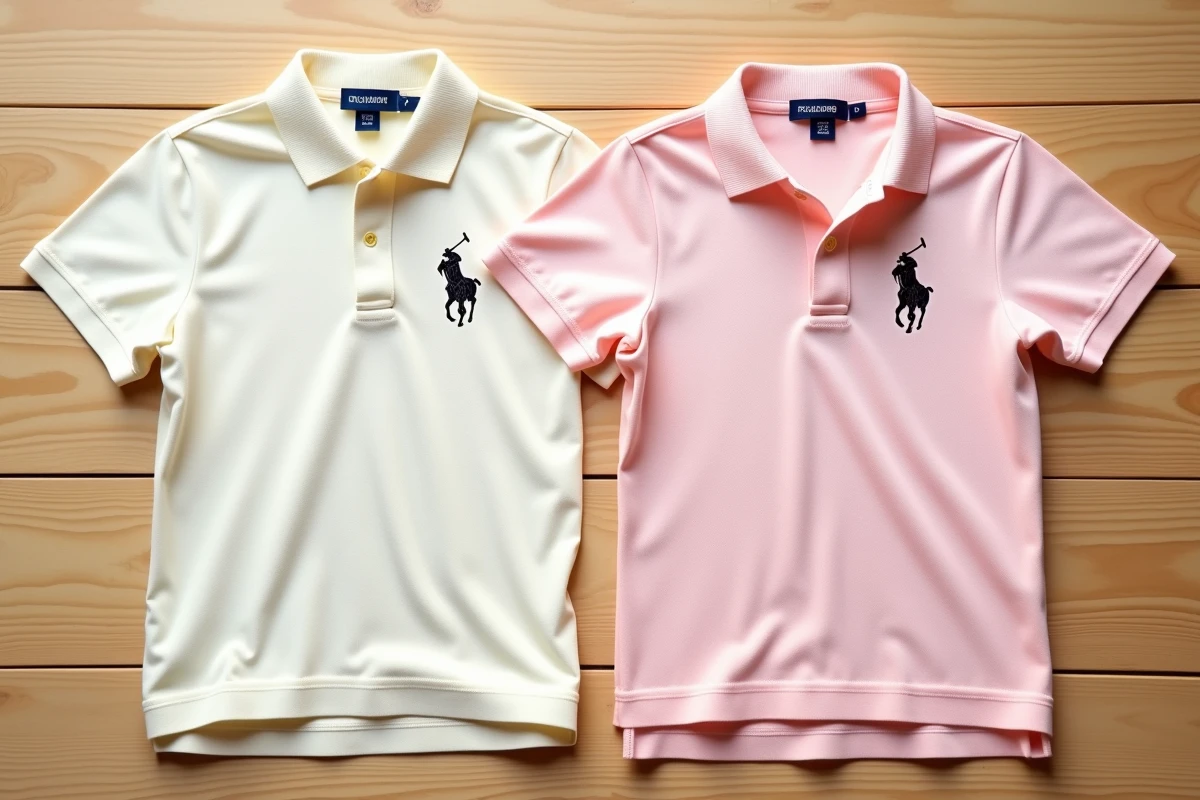
Polo Club (sometimes referred to as “Beverly Hills Polo Club” or “Santa Monica Polo Club”) does not display any of these mentions. The name Ralph Lauren never appears on a Polo Club piece, because there is no legal or commercial link between the two entities. The embroidered rider also differs: posture, horse proportions, and the number of players depicted vary from one brand to another.
To clearly understand the differences between Polo Club and Ralph Lauren, it saves time to check three elements on the label: the full brand name, the country of manufacture, and the textile composition. These details are enough to make a decision even before trying on the piece.
Polo Ralph Lauren and its sub-brands: understanding the hierarchy
Ralph Lauren Corporation encompasses several lines that cover a wide spectrum, from sportswear to bespoke. Polo Ralph Lauren is the “premium chic casual” line, the one most often seen in department stores. It offers polos, oxford shirts, chinos, and knit sweaters made from quality materials.
Above it, Purple Label represents the pinnacle of the brand: more prestigious materials, Italian craftsmanship, and more sophisticated design. Below it, Lauren Ralph Lauren targets a female audience at a more accessible price point. This segmentation by line allows the brand to cover multiple price ranges without diluting its image.
Polo Club: a price-centered positioning
The brands labeled “Polo Club” do not fit into this architecture. They occupy a niche that fashion analysts describe as “masstige” (mass prestige): logo-centric clothing sold at significantly lower prices. The style borrows from American preppy codes, but the construction of the pieces and the choice of fabrics remain behind.
Polo Club relies on visible logos and attractive prices, whereas Ralph Lauren focuses on fit, cotton density, and collection coherence. The two approaches meet different expectations, and neither is illegitimate, but confusing them is like comparing two different product categories.
Material quality and textile traceability: the real gap
This touches on the criterion that sways the purchasing decision when hesitating between the two. Ralph Lauren now communicates about material traceability: cashmere origin, animal welfare, ecological footprint of production stages. This “responsible premium” positioning structures the brand in a territory that Polo Club brands have not yet documented.
In practice, on a basic polo, the difference is felt when worn. The cotton used by Polo Ralph Lauren has a sufficiently dense weight to maintain its shape after multiple washes. Feedback varies on this point for Polo Club: some buyers report fabric that pills or distorts more quickly, while others find the quality-price ratio acceptable for occasional use.
- Polo Ralph Lauren favors thick piqué cotton, often with a rigid collar and mother-of-pearl or thick resin buttons.
- The Polo Club lines use lighter cotton-polyester blends, with simplified finishes (soft collar, standard buttons).
- The color palette at Ralph Lauren follows coherent seasonal themes, while Polo Club offers a wide range without a marked guiding thread.

Polo Club or Ralph Lauren: criteria for choice based on use
The context in which the garment is worn often determines the right choice. For everyday use without specific durability requirements (a vacation polo, a basic that is replaced each season), Polo Club meets the criteria without straining the budget.
However, as soon as one seeks a durable piece that ages well, a polo or shirt that will be worn for several years in a semi-formal setting, Polo Ralph Lauren offers a more reliable construction. A well-maintained Ralph Lauren polo retains its shape after dozens of washes.
Here are the situations where the choice becomes clearer:
- Gift giving: Ralph Lauren brings a recognized brand image and refined packaging. Polo Club is less well-received as a “prestige” gift.
- Capsule wardrobe: Ralph Lauren is preferred for its durable basics (polo, cable-knit sweater, oxford shirt).
- Frequent renewal: Polo Club allows for color and style variation at a lower cost.
- Resale: Polo Ralph Lauren pieces retain value in the second-hand market. Polo Club items are harder to resell.
The luxury segment of Ralph Lauren (Purple Label, Double RL) targets a different audience and simply cannot be compared to Polo Club brands. The confusion only concerns the Polo Ralph Lauren line, which shares equestrian imagery and the chic sportswear niche.
Ultimately, the most common mistake remains the impulsive purchase on a marketplace where both brands coexist in the same search results. Checking the complete label, comparing textile composition, and identifying the exact line of Ralph Lauren avoids any disappointment. The rider logo is not enough: it is the full name on the label that makes the distinction.